
If you are receiving this blog from me, it’s likely that instead of calling you out, I’m politely suggesting that you remove my original content that has been copied and pasted onto your site. In short, I’m tired of your shit. I appreciate that you love my blogs. Here are 7 ideas to respect my blog and other bloggers instead of partaking in the copy and paste…
A week doesn’t go by that someone doesn’t pilfer my blog content in full without permission. A week doesn’t go by that I don’t email someone or tweet them asking them to remove. Stealing original blog post content is theft. It’s a dirty, lying and cheating thing. This content and these blogs are my business. They are part of how I pay my bills and feed my family. At present, we produce 18 blog posts that are published online each week. Sometimes these blogs are posted on one of my many blogs sites and other times they are posted on paying clients blogs. Where or why, it doesn’t matter. Just know that this is how I make a living. In short, I hope you feel guilty.
Blog and Content Plagiarism – The Struggle Is Real
Content theft is a real problem and it’s not just hobbyist bloggers that are writing or blogging for fun. It’s called content and blog plagiarism. I’ve experienced content theft from all sizes of businesses including billion dollar companies.
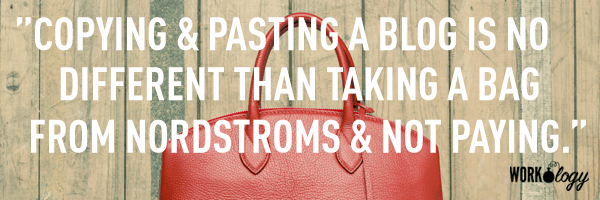
Most often the response from the thieving blog is of surprise meaning they didn’t know that their actions were wrong. Their belief is that it’s not theft if you cite the source. That’s the equivalent of saying, “I love this bag so much that I stole it from Nordstrom’s, and it’s totally okay.”
My blog content is often being stolen is because I have a full RSS. That means I don’t offer a summary on my really simple syndication feed. When you see my RSS feed, it’s all 500, 600 or more words and not just a snippet. I do that because my email subscribers don’t always like to click through, and I understand that because I am the same way.
Last year, I added a WordPress plugin so that when you copy and paste my blog, the link to the post is automatically added to the copied content on your clipboard. I did this because I wanted to remind you where you got that article or paragraph so you could properly cite me. One strategy I continue to employ is always linking back to my own blog in an article. I’m alerted to thievery via email because I receive what is called a “pingback” to my site. Sometimes you tweet me alerting me to your offense thinking you are real cool and hoping that I’ll share the blog you stole from me with my social media community.
While I appreciate that you like my blog, I know that content development is not easy. It takes skill, creativity and planning. The challenge with writing content is that it’s hard for it to be good. Very rarely do articles, blogs and stories go viral and viral is subjective. Viral in the human resources industry is different than other B2B markets. It’s another story in B2C. Yes, writing original, great, awesome content is hard. It’s the reason I published an ebook with 50 HR and recruiting blog post topics and suggestions for you to use absolutely free.
When someone thieves my original blog post, I get mad. I get real angry, but I try to remind myself that I was once a newbie blogger too. Maybe you are an intern who has his/her first gig as a community manager in a real job. Whatever the case, consider this blog an education for you on how to properly cite and feature blogs for your company or on your blog you are inspired by or enjoy reading. I might be mad. I’m probably hurt. I know I’m angry but this blog is meant to help you.
How to Properly Cite & Feature Blogs on Your Site
Instead of focusing on the latest blog cheater and content thievery, I thought to take a different approach. So, I won’t be writing about you and how you copy and pasted my blog in it’s entirety. I won’t call you out by name. Instead I’m focusing on solutions, suggestions and ways to help you write great content on your blog and avoid what I call the “copy paste.”
- Make a List of Your Favorite Blogs. Bloggers love to be recognized and people loved reading lists. Make a list of your 10, 25, 50 or 100 favorite blogs. Even better yet work with your graphic designer to make a badge so that bloggers can display their recognition and link back to your own blog.
- Summarize Your Favorite Blog. While copying and pasting the whole enchilada is not allowed, it is acceptable to include up to 75 words summarizing the blog post before providing your readers a link. Using a rephrase tool is a great way to avoid plagiarism.
- Write a Response Blog. As a blogger, I love it when someone responds or adds to a topic I’ve written about on my blog. Write a response to the blog post in question and link to it. There’s nothing I like more than stirring up a good debate because of my blog. As bloggers we put our opinions and knowledge out there. We want nothing more to hear from others than they enjoy, appreciate, are adding to or respectfully disagree with our point of view
- Create a Graphic That Compliments Their Blog. Use their blog as an inspiration point. Link to their blog and cite it as a source. Create a graphic that complements and adds on their genius. Click here for an example.
- Interview the Blogger. Maybe it’s a simple Q&A on your site, a podcast interview or a Google hangout. If you like my blog content, please email me and ask me to be interviewed by you. Flattery is the best way to free promotion and marketing.
- Create a Top Blogs of the Week Post. Bloggers love to get shout outs and this is a great way to let a blogger know you love the blogs they are writing. It’s a simple bulleted list with a short summary for each of your favorite blogs. Make sure to give those blog posts a link back and for even greater impact tweet your favorite blogs. Click here for an example.
- Invite Your Favorite Blogger to Guest Blog. (or vice versa) Depending on your industry and type of blog, guest blogging is a great way to build a relationship and grow your own blog’s fan base. Not everyone guest blogs for free. Keep that in mind and do your research before you approach the blogger. It’s likely in B2C that you will be paying your favorite blogger a fair amount to blog on your site. This is the case for seasoned, professional and experienced bloggers in the HR and recruiting industry.
My hope is that this blog inspires you to think before you make the decision to take another’s blog and copy paste. Blogging is a creative art. It’s also a career for many like myself. Blogging is artform for us that has evolved over time.
Check out this great resource by Hubspot on how to not steal content.