

“So scale of 1 to 10: how much of a sociopath are you?”
I had been on the job precisely three days. The question came from one of my new coworkers who was curious about the results of the mandatory personality (uh, “leadership”) assessment that I had to take before I was hired. The results were delivered to me in three booklets: two of them were harmless. The other was plastered in red and ominously labeled the “Challenge Report.”
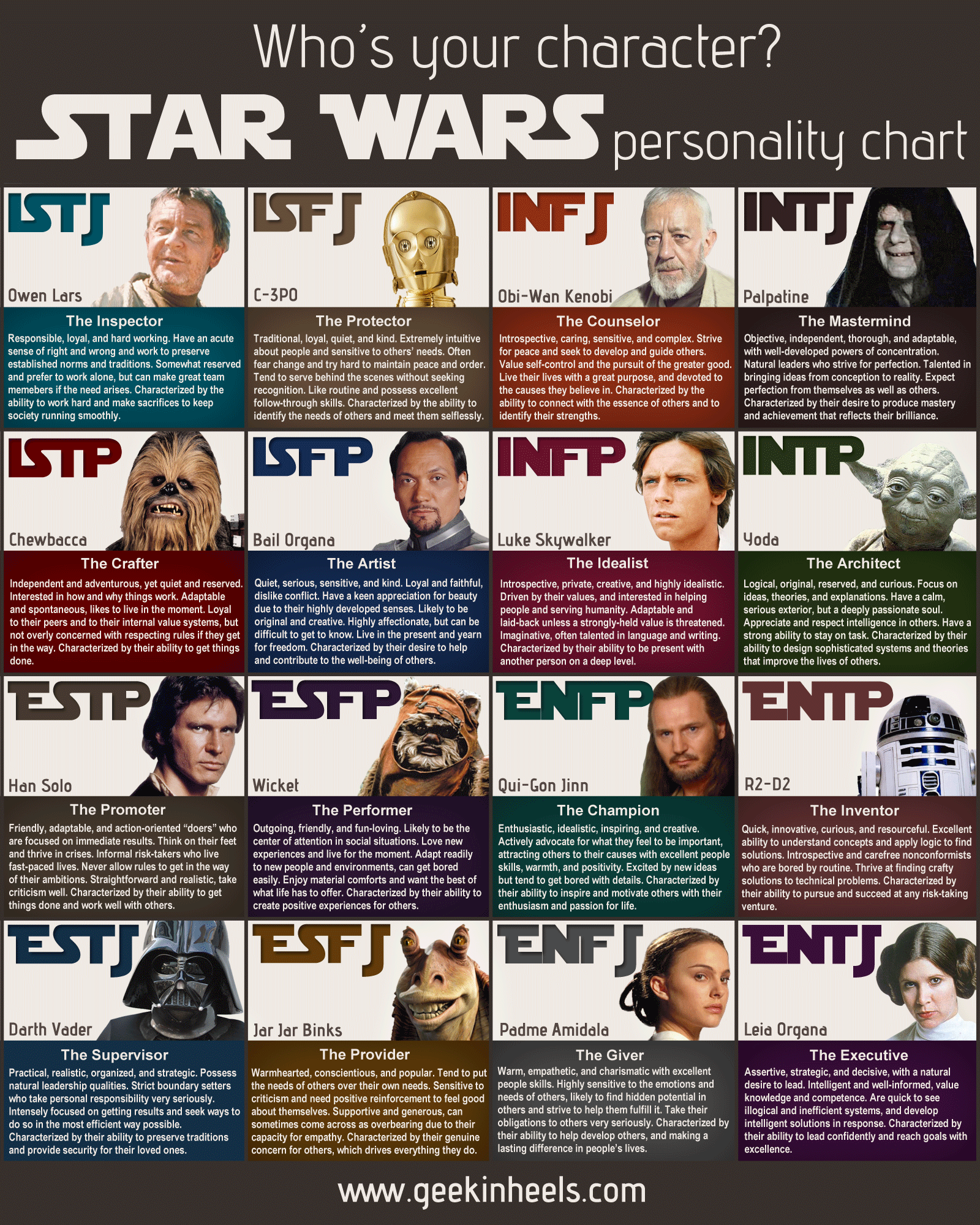
I should mention here that I’ve never done very well on tests like this. And before you give me that line about “there’s no wrong way to take a personality test,” I’m going to stop you right there. That is clearly bullshit, given that the last Myers Briggs test I took compared me to Emperor Palpatine.
The Challenge Report was no less brutal. In the place of tongue-in-cheek Star Wars references were numerous charts and graphs employed in the service of quantifying the exact degree to which my personality overlapped with Ted Bundy. I couldn’t believe I had been hired, much less allowed to roam the streets without police supervision.
Once I was over the initial shock, I got curious. A little google research revealed that the practice of giving employees some type of personality or emotional intelligence assessment is now quite common. 39% of companies do it. I also learned that the particular assessment that I took is by-and-large an excellent predictor of work performance, meaning that they are probably here to stay. So for the overwhelming majority of you who will one day have to face the Hogan (or similar assessment), I give you these hard-won survival tips.
5 hard-won survival tips for personality assessments:
Entertain the idea that the test may be accurate.
I hated every minute of going over my results, but I have to admit: it was right on the money. A year and half later, I still pull out The Challenge Report whenever I’m dealing with a difficult client, boss or coworker. 9 times out of 10, it’s me who is the problem. I had the privilege of working recently with a speaker and professor whose research centers on the subject of expertise. He told me last week that if you ask a novice to rate what they know on a scale of 1 to 10, they’ll choose 8.5. An expert, on the other hand, will chose 4.5. The minute you overestimate yourself is the minute you stop being an expert. The moral? If you want to smell like roses, you’ve got to be willing to sniff your own armpits.
The test contains voodoo magic and knows when you’re lying.
…and by voodoo magic, I mean a wildly sophisticated algorithm that lets your future employer know if you’re too good to be true. So be honest.
Even if it didn’t contain voodoo magic, you still don’t to lie.
This is because an assessment like this gives you the rare but priceless opportunity to KNOW if a job is going to make you miserable. Does money motivate you? If an employer rejects you because they systematically pay under market value, good on them for copping to it now. You may feel like a jilted lover, but better that than a battered spouse.
Don’t wait until you’re job hunting to take an assessment.
For one thing, wouldn’t it be nice to know what your employer is going to see ahead of time? For another, these assessments are excellent coaching tools that can get push you through a professional plateau. 99 times out 100, the things holding us back in our career are not technical skills–it’s “soft” skills like our ability to play nice with others that may keep us in lateral loop when we’re ready to keep climbing the ladder. Sophisticated assessments like these are a great window into those blind spots.
Employers: don’t be a jerk.
There are a million and one ways that a test like this can piss off a candidate, not least of which is the fact that many of these questions are highly intimate, and you’re asking them before he or she is even a part of the company. The best way to not be a jerk about it is to make sure that whoever administers the test, explains the test to the candidate, and makes hiring decisions based on that information is both highly qualified and highly empathetic.
When I took the test as a candidate, I was a little irritated that the company wanted to know things like whether I preferred to do meaningful work or make lots of money. If I chose the first, was I agreeing to take lower pay? If I chose the second, was I admitting to being shallow? Was this any of their business?
Building a better candidate experience
Here’s what smoothed it over for me: the company employed a very competent, very nice woman who explained the exam before I took it and detailed exactly how the information would and wouldn’t be used. Then, once hired, she took an hour and a half to go over the results with me in person. During that time, she identified exactly why the company had hired me, what they expected me to do, and what might get in my way. She introduced me to other people on the team who shared my personality traits, and made sure to point out people who were distinctly my opposite. My first 90 days at the company were the smoothest I’ve ever experienced, because I knew the work style of every individual at the company before I’d even had time to learn all their names.
Have you had to take a personality assessment as part of the hiring process? What did you think?






One Comment
31 year Senior Director with experience in 4 F100 companies.
I have built and run entire divisions and ran as many as 40 managers and over 6000 employees.
My record at hiring AND retaining employees at all levels has been almost spotless and the metrics show companies that depend on these tests consistently struggle in both areas.
Somewhere along the way hiring authorities lost THEIR ability to read a candidate through personal interaction. Testing is another tentacle of the too often overly convoluted and irrelevant process driven by so called Human Resources experts.
These methods create a guarded mindset within a candidate that causes a tendency to answer to what they perceive the employer wants to hear: rather than give an honest response.
These test are pure Bullshit.
R.S Stoufus
Comments are closed.